


The scientific holding Scientific Alliance marks a milestone – 10 years in expert support for scholars. What achievements are we most proud of? Read on.

Why is it important to start preparing for publication in advance, rather than putting it off until autumn?
Preparing a scientific article for publication goes far beyond writing the text: it also includes selecting a journal and going through peer review. Why do scholars often put this work off until the end of the year? And what does rushing before a reporting period lead to? We look at why it is better to start preparing a publication in advance and how to plan the time before autumn arrives.
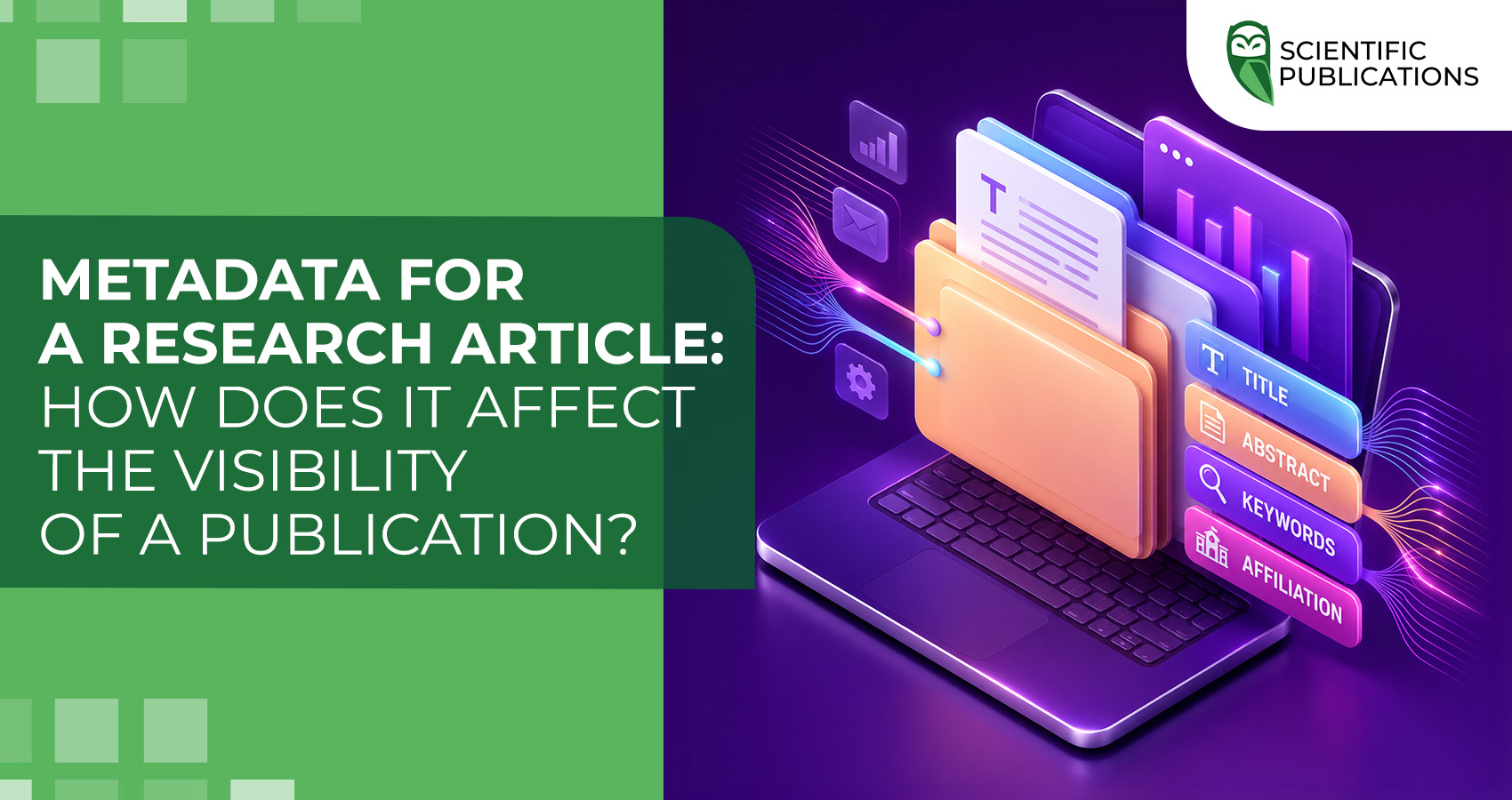
Metadata for a research article: how does it affect the visibility of a publication?
Scientific article metadata is the set of information that determines its visibility in citation databases and search engines. How do you choose a precise title that won't get lost among thousands of similar phrasings? Why does the abstract decide an article's fate before anyone has read it in full? We look at how the title, abstract, keywords and affiliation shape whether the right readers ever find the work.

Artificial intelligence in scientific articles: what is permitted and what must be declared
More and more scientists are using artificial intelligence when preparing scientific articles – from finding the right wording to analysing the literature. But does the journal’s editorial board need to be told about this, and where is the line between acceptable help and a breach of academic ethics? We cover all of this in today’s video.
Conflict of interest in publications: when to declare it and why it matters
The absence of a conflict of interest declaration can cast doubt on the objectivity of even a methodologically flawless study. Which relationships are considered a conflict of interest, and why do journal editors pay such close attention to this issue? We look at when a conflict of interest must be disclosed and what the consequences of concealing it can be.
Academic integrity: what you need to know
Academic integrity is the foundation of trust in the results of scholarly work, without which a publication or thesis defence loses its value in the eyes of reviewers and attestation commissions. What counts as a violation of these principles? What measures do journals and the NAC take when such violations are detected? All this in today’s article.
Order a publication
Contact a manager
SUBMIT AN APPLICATION
X

We have a gift for you!
Free citation of your research or a discount on publication services — the choice is yours!
Denys Hlushko
Director of the company
"Scientific Publications Kyrgyzstan"