Preparing publications for a dissertation defence takes time that is hard to make up in the final month. The academic year is a convenient reference point for spreading this work into stages.
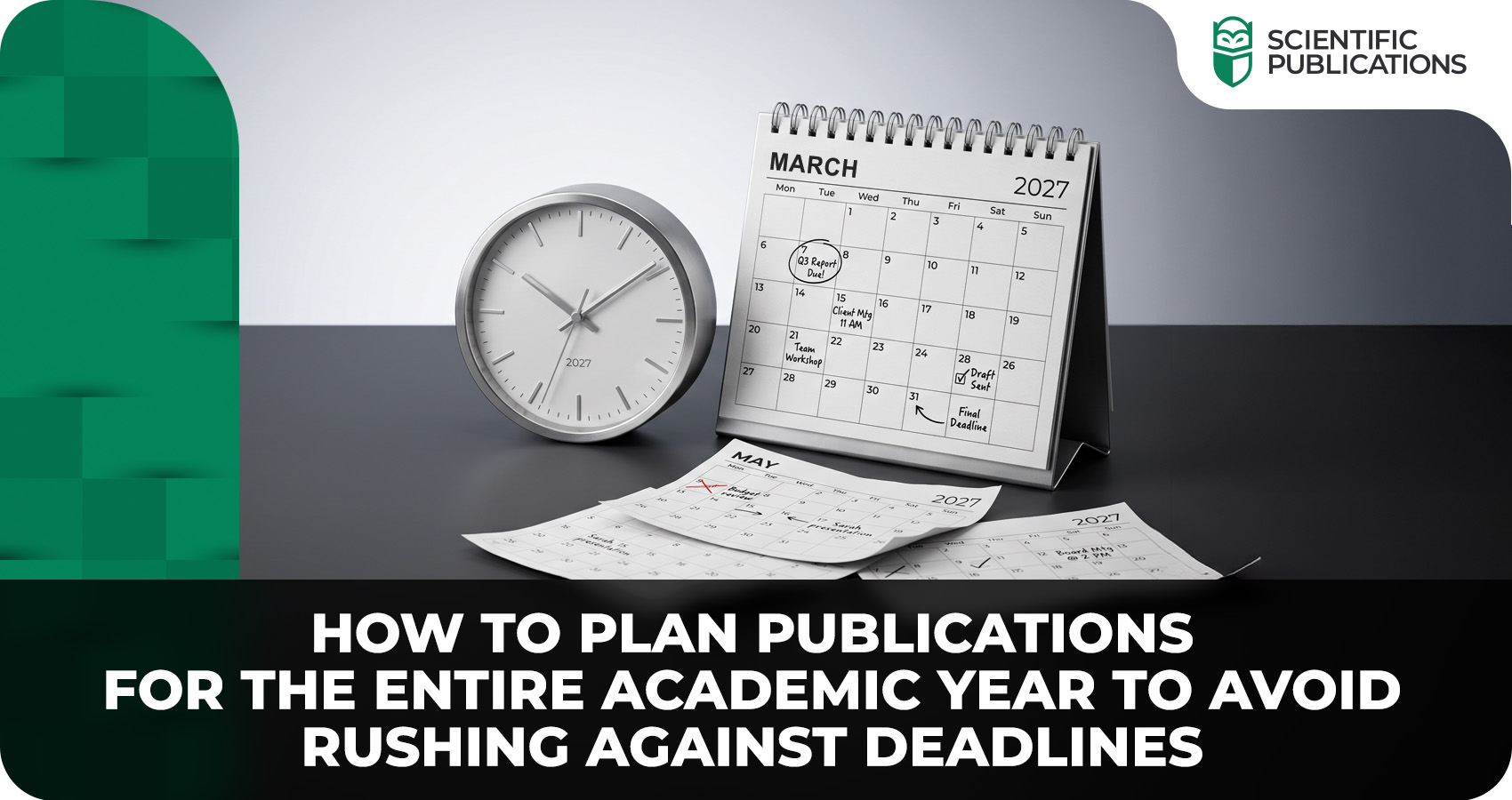
Why plan publications for the academic year in advance?
Preparing a scientific article involves several sequential stages – choosing a journal, formatting the manuscript, peer review, and possible revisions. Each of these can take anywhere from a few weeks to several months.
Planning these stages in advance allows a candidate to account for possible delays on the journal's side. Without such a plan, publication preparation tends to shift towards the end of the academic year, increasing the risk of missing the defence.
How to start planning publications for the academic year
Before drawing up a schedule, it helps to check the number and type of publications required for a defence in the chosen specialism. These requirements are set by the Higher Attestation Commission of the Kyrgyz Republic (HAC KR).
Current requirements for candidates' publications are set out in the Regulation on the Procedure for Awarding Academic Degrees, approved by HAC KR. The document also sets the timeframe for reviewing certification files.
How many publications are needed for a defence during the academic year?
For a Candidate of Sciences defence, a candidate needs at least 5 publications, including one article in a journal indexed by Scopus or Web of Science, and one article in RSCI (Russian Science Citation Index) with an impact factor of at least 0.2. The remaining publications must appear in HAC KR's list of peer-reviewed journals.
For a Doctor of Sciences degree defended by a Candidate of Sciences, at least 15 publications are required, including 2 articles in journals indexed by Scopus or Web of Science and 1 article in the RSCI core.
One rule worth noting: no more than two of a candidate's articles are counted from a single journal issue – the rest are not taken into account.
How review timelines affect a publication plan
The average time for peer review varies from a few weeks to several months and depends on the policy of the specific journal rather than its indexing alone. Additional time may be needed to revise the manuscript following reviewers' comments.
HAC KR's review of the certification file after the defence takes up to three months, so all publications forming part of the dissertation must be ready in advance, before the documents are submitted to the dissertation council.
What stages to include in an academic year publication plan?
- Agree on your specialism and dissertation topic with your academic supervisor.
- Review the current HAC KR requirements for the number and type of publications.
- Draw up a list of journals that match your research profile.
- Spread the preparation and submission of articles across the academic year, allowing extra time for review.
- Set interim deadlines for each publication and track their progress.
Common mistakes that disrupt publication timelines
- choosing a journal without checking the current HAC list or its up-to-date indexing
- submitting a manuscript without following a specific journal's formatting requirements
- publishing more of a candidate's articles in one journal issue than the counted limit allows
- leaving article preparation until the final months before the defence
Planning publications across the whole academic year reduces the risk of delays before a dissertation defence. What matters is not only HAC KR's requirements for the number of articles, but also the real review timelines of each journal.
Planning a scientific article and need help with its publication? Specialists from the Scientific Publications company will help you choose a suitable journal, check compliance with HAC KR requirements, and support you at every stage of the publication process. To get a free consultation, fill out the form below, and our manager will contact you shortly. Onward to new scientific achievements!