A researcher's publication activity is inseparable from reporting periods. Postgraduate students include articles in their individual annual plans, full-time academic staff report against publication metrics, and candidates for academic degrees must compile a required list of works before defending their dissertations. In all these cases, a publication plan drawn up in advance helps to avoid a situation where the necessary articles do not complete their full publication cycle before the reporting period ends.
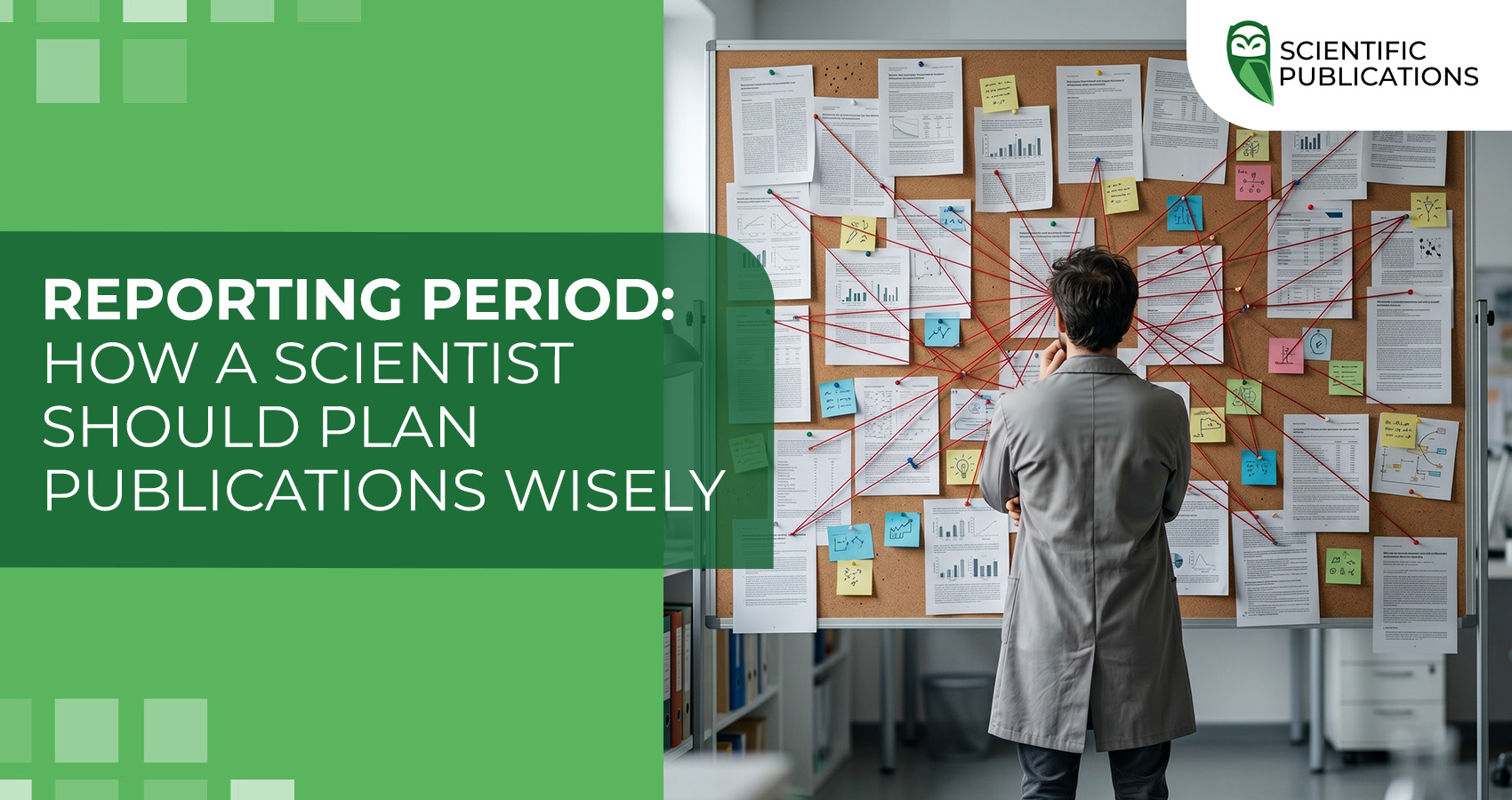
What is a reporting period for a researcher?
The concept of “reporting period” in the context of academic activity covers several situations. For postgraduate students, this is typically the academic year: at the end of it, a report on the fulfilment of the individual plan is compiled, where publications serve as one of the key indicators. For full-time staff at universities and research institutions, it is the calendar year against which publication and other results are assessed. For candidates for an academic degree, it is the period preceding the preliminary review or defence of the dissertation.
In most cases, submitting an article to a journal is not sufficient for it to count towards the reporting period: what counts is either an official acceptance notice from the editorial office, or the already published issue. This fact directly affects the logic of drawing up a plan.
Components of a publication plan: main types of work
Requirements for publications depend on the goal. For candidates seeking the degrees of Candidate of Sciences and Doctor of Sciences in the Kyrgyz Republic, the composition and minimum number of publications is determined by the “National Attestation Commission (NAC) under the President of the Kyrgyz Republic”. Some works must appear in journals included in the HAС KR list; for certain categories of candidates, publications in journals indexed in Scopus or Web of Science are required.
When drawing up a publication plan for the reporting period, a researcher typically distributes work across the following categories:
- articles in journals from the HAC KR list
- articles in journals indexed in Scopus or Web of Science
- papers for international or national scientific conferences
- chapters in collective monographs or independent monographs (where a relevant plan exists)
Breaking the work down by category helps to assess the overall scope and distribute effort across the months.
How to calculate publication timelines in advance?
One of the most common errors in planning is underestimating the time required for a full publication cycle. Between starting work on a manuscript and the indexation of the article in a database, it is not unusual for 8-14 months to pass. This range breaks down into the following stages:
- Preparation of the manuscript – writing and editing the text in line with methodological requirements. Depending on the scope and complexity of the topic, this stage takes from several weeks to 2-3 months.
- Journal selection and preparation for submission – verifying the current status of the journal in Scopus or WoS, formatting the manuscript to the editorial requirements, and preparing a cover letter. This usually takes 1-2 weeks.
- Peer review – the average duration in journals indexed in Scopus is 2-6 months, depending on the quartile, subject area, and editorial workload.
- Revision in response to reviewer comments – from several days to several weeks. The specific timeframe is determined by the volume and nature of the comments.
- Acceptance and issue publication – from 1-6 months, depending on the publication frequency and the journal's editorial schedule.
- Indexation of the article – this occurs after the issue is published; timelines depend on the policy of the specific database and the individual journal.
Mistakes in planning publications during the reporting period
Some of the difficulties researchers face during the reporting period stem not from the quality of the articles themselves, but from errors made at the planning stage. Among the most common:
- overestimating the speed of peer review, given that actual timelines run to several months
- selecting a journal without first verifying its current status in Scopus or WoS
- leaving manuscript preparation until the final months of the reporting period
- submitting a single manuscript to several journals simultaneously, which violates publication ethics and carries the risk of rejection in future submissions
- a mismatch between the article's subject matter and the profile of the chosen journal, resulting in desk rejection without peer review
The issue of self-plagiarism warrants particular attention. A significant overlap between a new manuscript and previously published material constitutes grounds for rejection, even where the article otherwise fits the journal's profile.
Effective publication planning calls for a systematic approach: establishing the required composition of works, making a realistic assessment of the timelines for each stage, and building in a buffer for potential revisions following peer review. This approach allows the researcher to close the reporting period without a shortfall in publications or violations of academic ethics.
Planning a publication in a journal indexed in Scopus or Web of Science? Specialists at Scientific Publications will help verify the current status of the journal, match it to your subject area, and provide support at every stage of the publication process. To receive a free consultation, please fill in the form below – a manager will be in touch shortly. Onwards to new scientific achievements!