Publications in Scopus and Web of Science journals in Kyrgyzstan are increasingly ceasing to be the personal concern of an individual scientist – they are becoming part of systemic requirements for universities and research organisations. This article examines what has changed and why demand for such publications continues to grow.
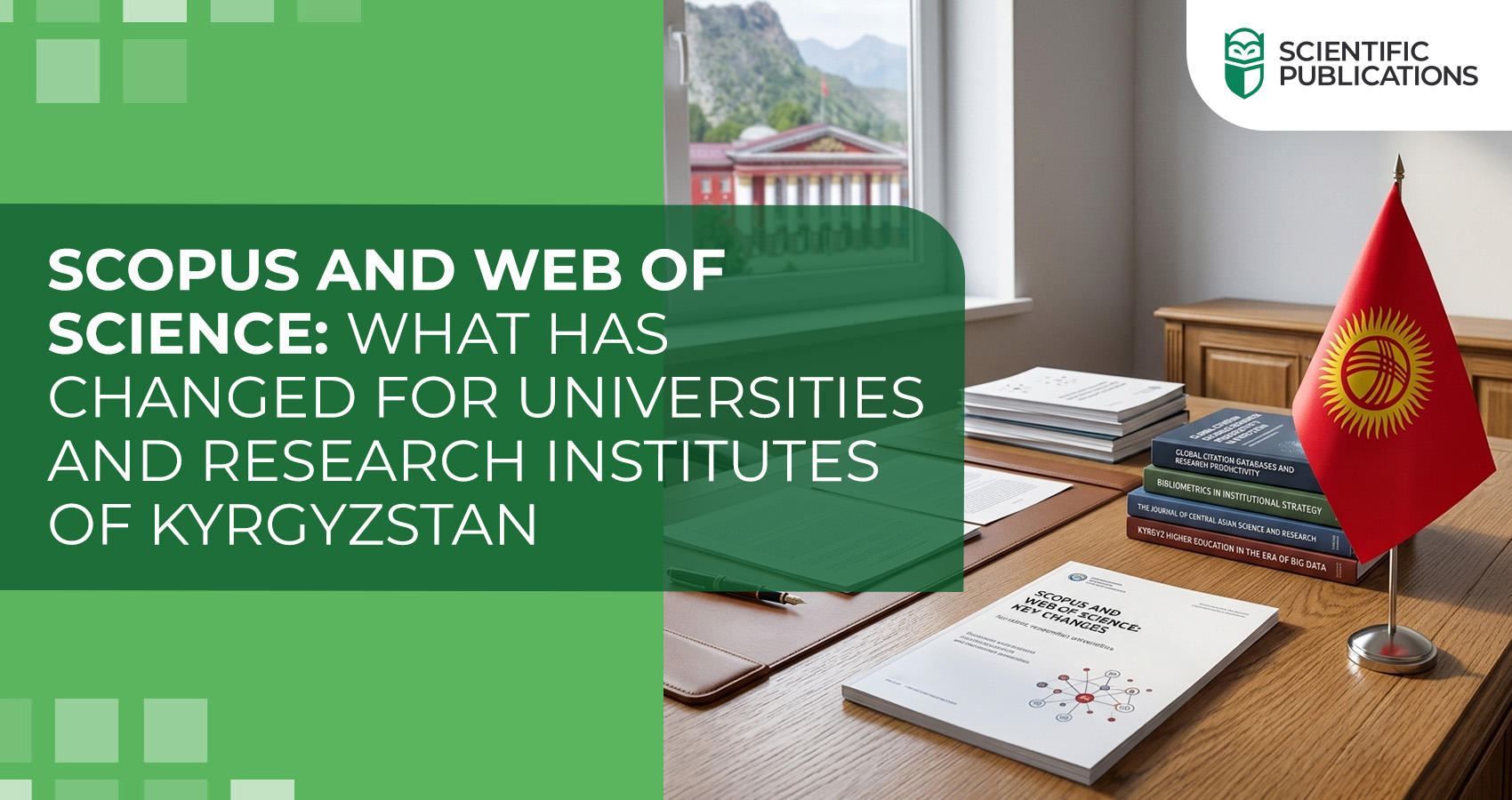
Why is demand for publications in Scopus and Web of Science growing in Kyrgyzstan?
Demand for publications in international scientific databases in Kyrgyzstan is shaped by several factors: having an article in a journal indexed by Scopus or Web of Science is among the mandatory conditions for defending a Candidate of Sciences or Doctor of Sciences dissertation, publication activity indicators are taken into account when allocating state grants, and international publications are becoming one of the indicators of university performance under the ongoing higher education reform.
In 2025 alone, Osh State University published 378 articles in journals indexed by Scopus, and the number of academic staff holding academic degrees at the university reached 600.
Kyrgyzstan’s HAC requirements for publications when defending a dissertation
The main document governing publication requirements for dissertations is the Regulation on the Procedure for Awarding Academic Degrees, approved by Decree No. 12 of the President of the Kyrgyz Republic dated 18 January 2022. The document sets out the following requirements for the number of publications:
- for a Candidate of Sciences dissertation – at least five publications, including one article in a journal indexed by Scopus and/or Web of Science, plus publications on the HAC List of peer-reviewed journals
- for a Doctor of Sciences dissertation – at least fifteen publications, including two articles in journals indexed by Scopus and/or Web of Science, plus publications on the HAC List
- for a Doctor of Sciences dissertation defended in the form of a scientific report – at least twelve articles in journals indexed by Scopus and/or Web of Science, plus a sole-authored monograph
One new provision deserves particular attention: using text generated by artificial intelligence in a dissertation without proper referencing is treated as plagiarism and is grounds for rejecting the work with no right to a repeat defence.
When choosing a journal for publication, degree candidates, universities and research institutes generally take into account a number of general criteria:
- relevance to the subject of the research
- indexing in Scopus or Web of Science
- no signs of being a disreputable publication
- transparent review conditions and publication timelines
- correct formatting of author and affiliation details
What is changing for universities and research institutes in Kyrgyzstan by 2030?
In 2026, the Cabinet of Ministers of the Kyrgyz Republic put out for public discussion a draft State Programme for the Development of Science, Higher Education, Intellectual Property and Innovation for 2026–2030, developed as part of the country’s National Development Programme to 2030. Among the goals set out are:
- An increase in the volume of publications in international databases.
- Growth in the number of patents and implemented developments by at least threefold.
- An increase in the share of research spending in university budgets to 20%.
- At least ten universities in Kyrgyzstan entering international rankings.
- The creation of a national science and innovation fund.
In parallel, amendments to the Law “On Science” are under consideration, clarifying the funding of research institutes, the status of the National Academy of Sciences, and the reporting line of the Higher Attestation Commission.
New rules for academic titles and foreign degrees in Kyrgyzstan
The changes have also affected the procedure for awarding academic titles. Under Resolution No. 637 of the Cabinet of Ministers of the Kyrgyz Republic dated 6 October 2025, the title of Associate Professor requires at least four articles in journals indexed by Scopus and/or Web of Science, together with at least two teaching or methodological works. The requirements for the title of Professor are considerably higher and vary depending on the candidate’s degree and position: typically, this means at least five teaching or methodological works and from one to several articles in journals indexed by Scopus and/or Web of Science.
In addition, PhD and Habilitated Doctor (Dr Habil) degrees awarded by institutions ranked in the top 500 of the QS World University Rankings or Times Higher Education are recognised in Kyrgyzstan automatically, without additional academic and expert assessment.
The growing number of requirements for publications in Scopus and Web of Science reflects the overall direction of science and higher education reform in Kyrgyzstan – from individual dissertation rules to the goals of the state programme to 2030. For universities, research institutes and individual scientists, this means the need to plan a publication strategy in advance, taking the updated requirements into account.
Need help publishing an article in Scopus or Web of Science? Specialists at Scientific Publications will help you select a suitable journal, check compliance with HAC requirements, and support you at every stage of the publication process. To receive a free consultation, fill in the form below and our manager will contact you shortly.