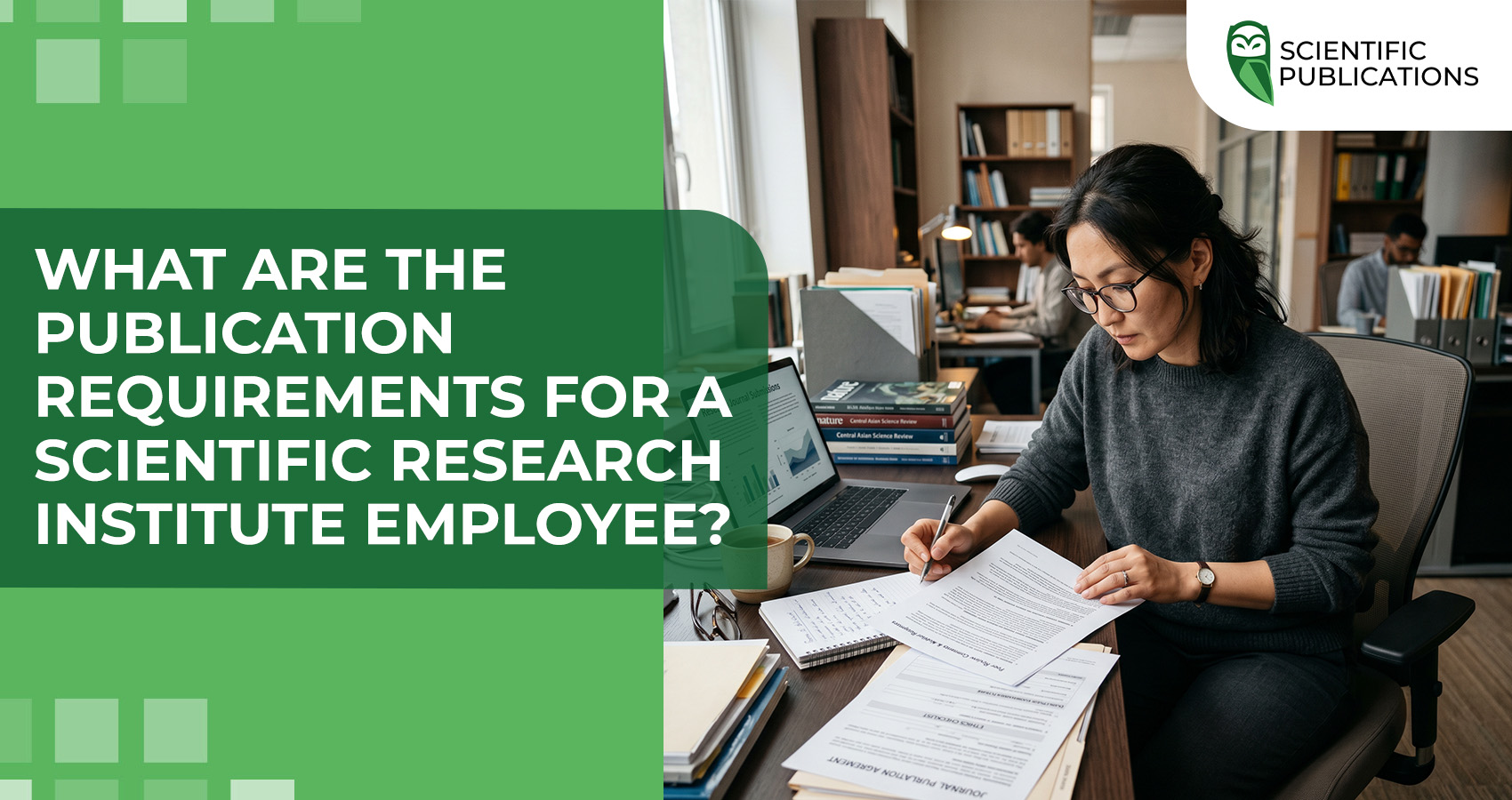
The publication activity of a research institute employee constitutes a mandatory component of professional work, regulated both by the internal provisions of the organisation and by state requirements for scientific personnel. The quality and regularity of publications determine the outcome of attestation, the possibility of taking up higher positions, and participation in grant programmes.
Why does a research institute employee need to engage in publication activity?
Publications serve as the principal instrument for assessing the scientific productivity of an employee. They provide the basis for forming a view of the researcher's contribution to the development of the chosen field, the relevance of the research being conducted and the level of academic qualification. The recording of publication activity is applied during the attestation of scientific personnel, in the review of institutional reporting to supervising authorities, and in the consideration of applications for the funding of research projects.
Alongside their administrative function, publications serve as a means of professional communication. They ensure the dissemination of research findings within the scientific community, support the author's inclusion in international research networks and shape their academic reputation. Without the consistent development of a publication portfolio, it is more difficult for an employee to qualify for promotion, the award of academic degrees or the leadership of scientific topics.
What types of publications are recognised for research institute employees?
When assessing the publication activity of research institute employees, several categories of scientific work are taken into account, each carrying its own weight within the overall system of recording:
- articles in journals indexed in the international Scopus and Web of Science databases
- articles in journals approved by the Higher Attestation Commission of the Kyrgyz Republic (HAC KR)
- monographs and chapters in collective scientific publications
- conference proceedings included in internationally indexed collections
- patents, certificates of authorship and other documents protecting the results of intellectual activity
The balance between these categories and the requirements regarding their number are determined by the internal provisions of the institute, by sector-specific considerations and by the employee's position. For this reason, it is advisable to consult the organisation's current regulatory documents before planning publication activity.
Requirements for indexed journals
When selecting a journal to which to submit an article, a number of parameters affecting recognition of the publication within attestation procedures are taken into account. Above all, the journal's indexation in recognised databases – Scopus or Web of Science – is verified, along with its current status, since journals may be removed from these databases. The journal's quartile, its thematic profile and the alignment of the material with editorial requirements are also assessed.
Journals included in the HAC KR list are subject to their own criteria: the publication must retain active status on the approved list at the time the article appears. Employees are advised to verify the relevance of information about the chosen journal in advance, since articles in publications that have lost the relevant status may not be taken into account during assessment.
How do publication activity norms depend on the position held?
The volume of publication requirements is, as a rule, linked to the scientific position held. In generalised form, the pattern is as follows:
- Junior research fellow – a minimum volume of publications, predominantly in national journals, with a gradual transition to the international level.
- Research fellow – an expanded list of publications, with a mandatory presence of work in indexed journals.
- Senior research fellow – regular publication activity, including articles in journals indexed in Scopus or Web of Science.
- Leading and chief research fellow – a high level of publication activity, including work in upper-quartile journals and monographs, together with involvement in the training of early-career researchers.
The figures cited above are general in nature. Specific quotas are established by the regulations of the particular institute and may vary depending on the field of science and the type of organisation.
Difficulties in meeting the requirements for research institute employees
In practice, employees encounter a number of difficulties that affect the timely fulfilment of publication norms. Among the most frequent are the long review periods in international journals, which become particularly noticeable during preparation for attestation within a limited time frame. The choice of journal is also a significant factor: submitting material to a publication that does not match the subject area, or to a journal of questionable reputation, often results in rejection or in subsequent problems with having the publication recognised.
A separate category of difficulties concerns matters of co-authorship, accuracy of citation and adherence to publication ethics. A high proportion of self-citation, the duplication of an author's previously published findings, or the unauthorised use of data from collective research can lead to the rejection of an article or to the retraction of one already published.
Meeting publication requirements is a sustained process that involves the selection of relevant topics, the choice of suitable journals and adherence to academic standards. The systematic development of a portfolio aligned with established norms and the employee's strategic objectives helps to reduce risks and to enhance the effectiveness of scientific work over the long term.
Are you planning to publish in an international journal? Get in touch with Scientific Publications. Our specialists will help to verify the status of the journal, assess the article's compliance with the requirements and select the most suitable publication. To receive a free consultation, please complete the form below and our manager will be in touch shortly. Onwards to new scientific achievements!