

WE SUPPORT YOU UNTIL INDEXING

What you can order from us?
Scopus
We provide full support for our clients’ scientific articles through to indexing in journals included in the Scopus database

We publish articles in scientific journals included in the Web of Science scientometric database. We help with journal selection

We help increase the scientometric indicator known as the Hirsch index, which helps researchers gain recognition in the scientific world

We publish articles in international journals, which increases article citation rates and advances the researcher’s career

It is worth working with us!!
The Kyrgyz company Scientific Publications is part of the international holding Scientific Alliance and is the absolute leader in scientific consulting and scientometrics in the CIS. We have been developing this field since 2016 and during this period became the first to provide high-quality and professional scientific publication services. In addition, our company actively operates in more than 45 countries, including Germany, France, Lithuania, Poland, Georgia, Kazakhstan, China, South Korea, and others.
Scientific Publications is an established brand perceived by the academic community as a company that guarantees results. This very ideology of client interaction became the reason for creating our slogan: “Result, not process.”
The values of Scientific Publications are based on honesty and respect for every client. We take responsibility for all projects of researchers who turn to us for publication support, guarantee timely fulfillment of the terms of the Agreement, and ensure maximum transparency throughout its implementation.
The company successfully cooperates with researchers from around the world, scientific institutions, universities, government and public organizations, as confirmed by signed documents and memorandums.
Denys Hlushko
Director of Scientific Publications Kyrgyzstan

Our partners and clients





























Our team
Our team thinks ahead, planning long-term and fruitful cooperation with researchers that will benefit both parties.
Scientific Publications is focused on expanding both external partnerships and the internal growth of its team of specialists. It is important for us to create trends in scientometrics and science, work on new interesting projects, and develop the research field.

GET A FREE CONSULTATION
ANSWERS TO THE MOST POPULAR QUESTIONS
-
1. Does the company provide an official cooperation agreement?Scientific Publications provides services officially and operates exclusively within the legal framework. At the beginning of cooperation with each client, we conclude an agreement where we specify all the terms and conditions of cooperation. Our specialists provide documents on the work performed and an invoice, if it is necessary for reporting.
-
2. Do you publish papers in all scientific areas?Our company employs many specialists in various scientific areas, we do not focus on a particular specialisation. Notably, 80 % of our publications are studies on chemistry, physics, mathematics, biology, economics, law, medicine, ecology, pedagogy, and other related branches of these sciences.
-
3. What terms of publication of the paper do you provide?The publication period in a high-quality journal takes on average from several months to a year. It all depends on the level of the material that was submitted by the author, and the requirements for the journal and its rating. In some cases, the publication of papers is possible in a sped-up fashion. This is not an advantage or a special service. For Scientific Publications, any publication is of top priority!
New articles from our blog
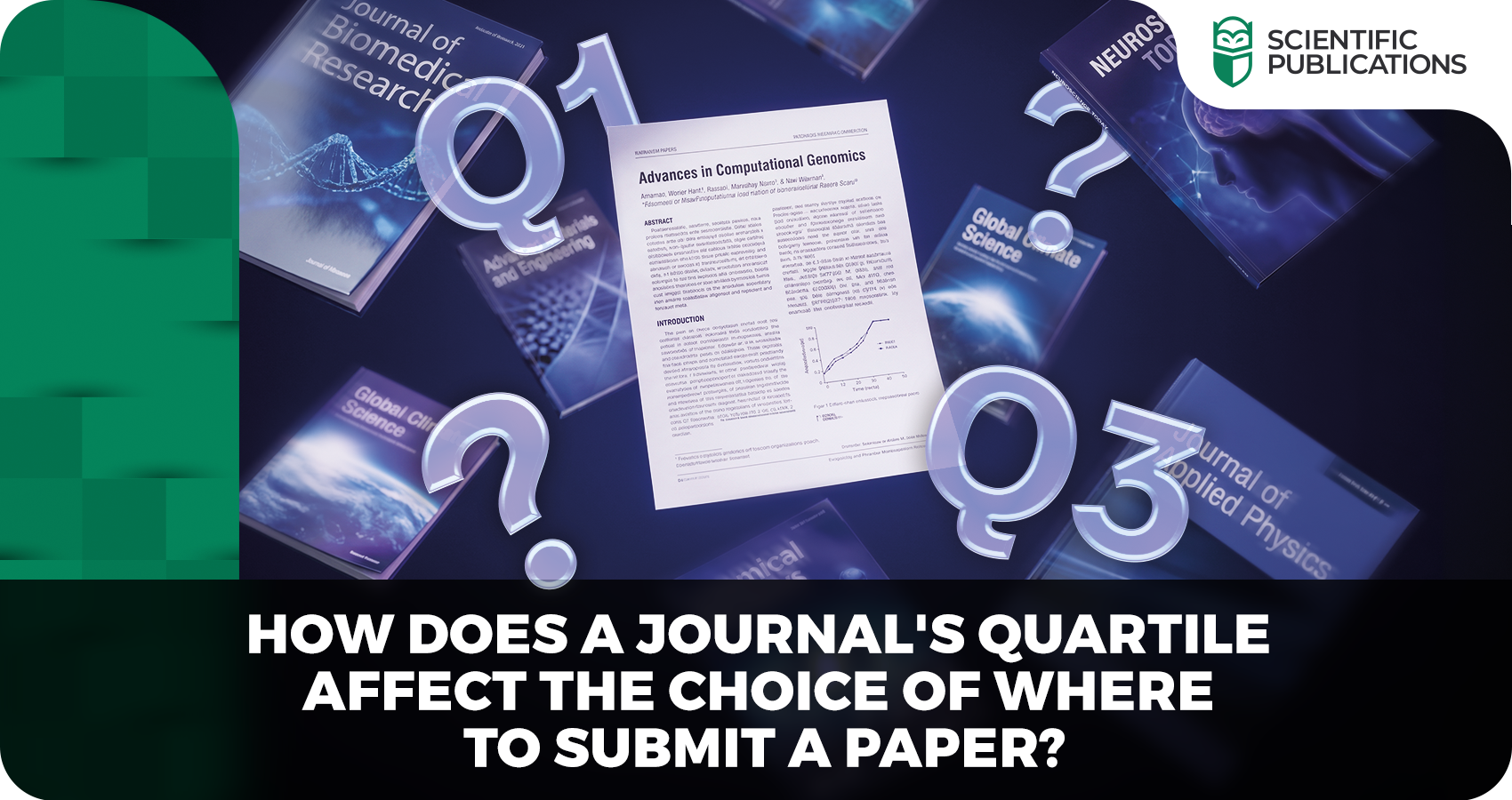
How does a journal's quartile affect the choice of where to submit a paper?
A quartile often becomes the first point of reference when choosing a journal, but it does not show whether a journal is suitable for a particular article. What does this indicator mean? Is a specific quartile required for a dissertation defence in Kyrgyzstan? We look at how to take it into account.
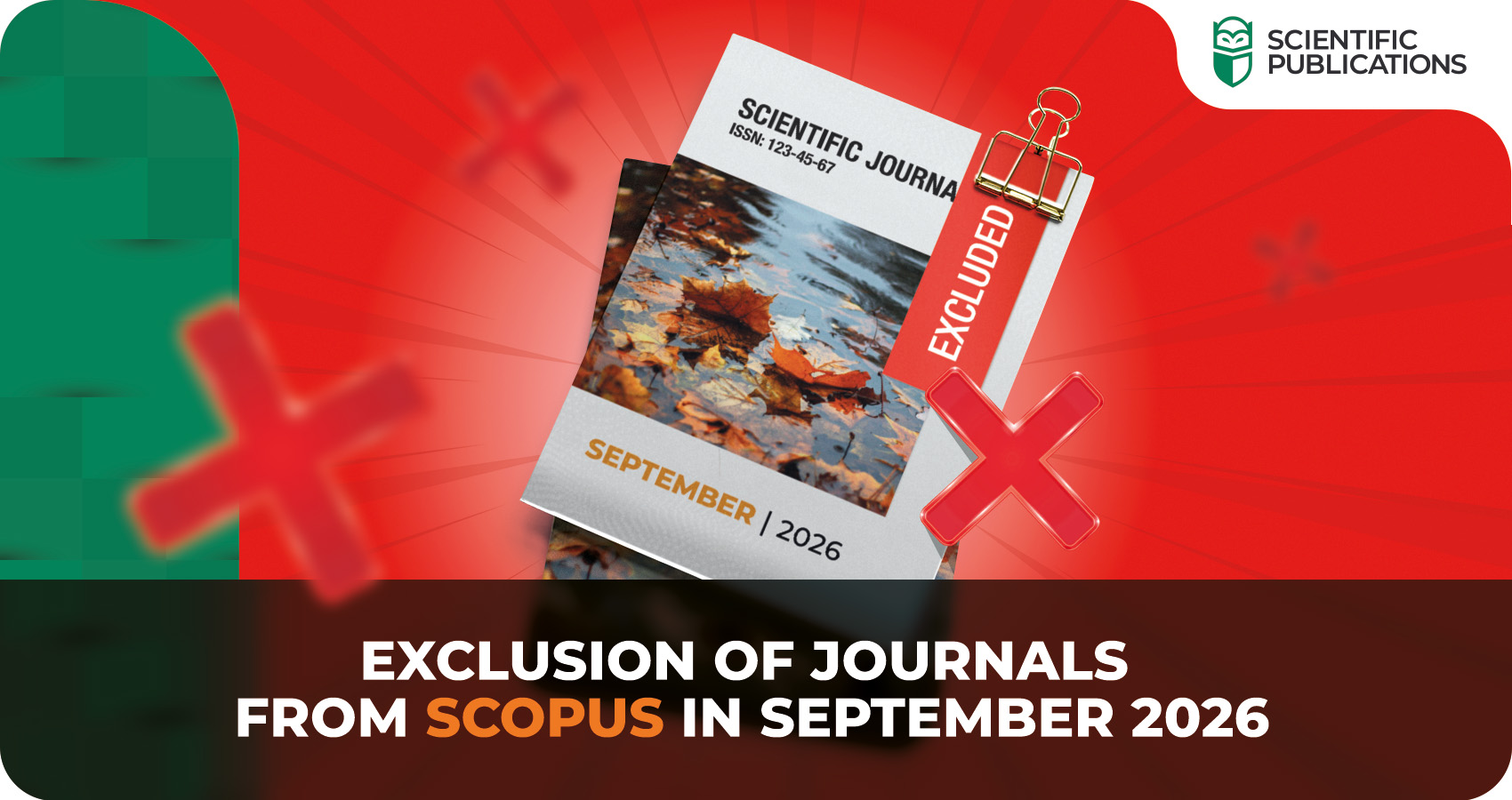
Exclusion of journals from Scopus in September 2026
Scopus regularly reviews the journals in its database and removes those that no longer meet its selection criteria. Which titles lost their indexing in September 2026, and why? We cover it all in today's article.
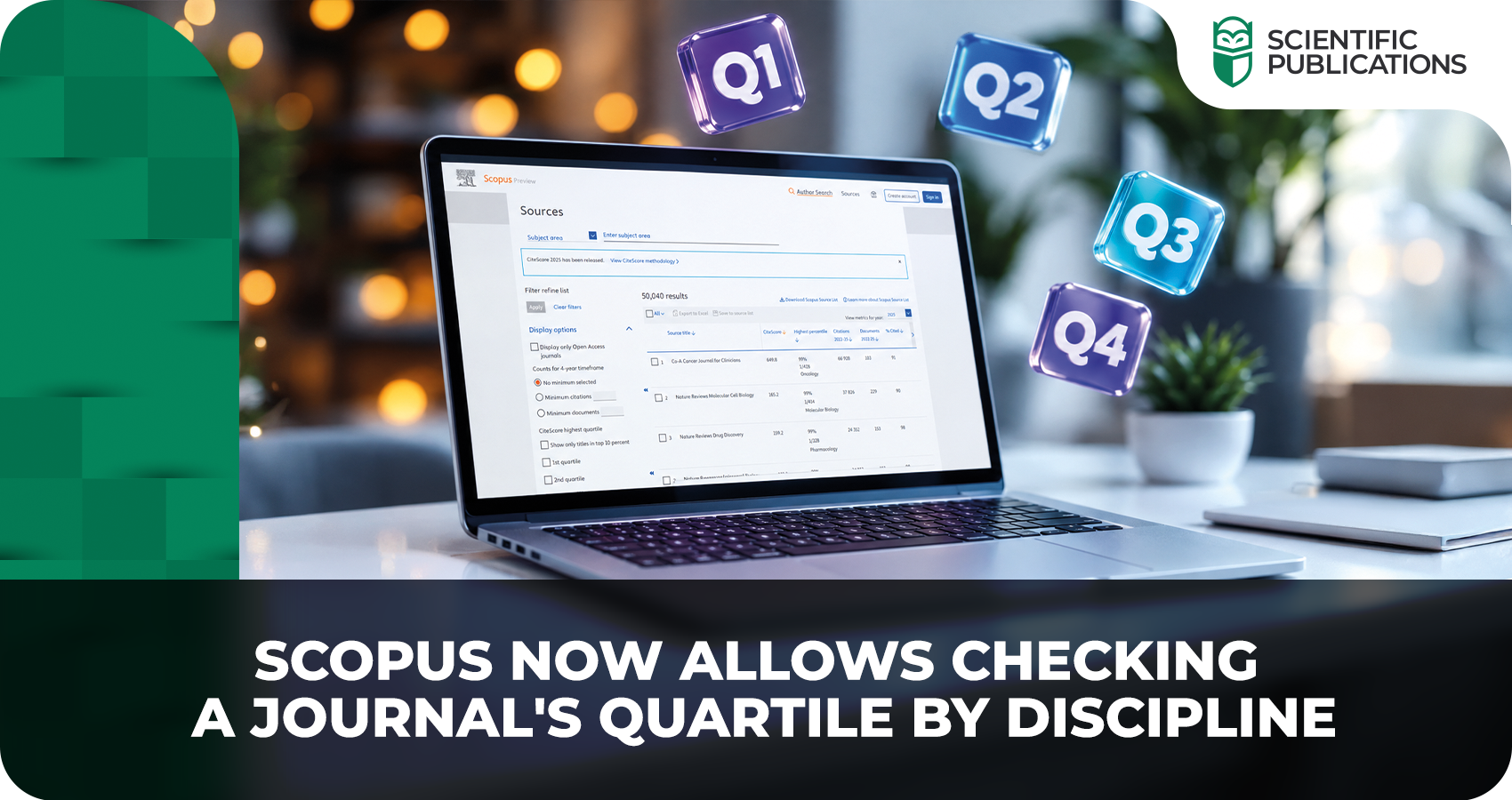
Scopus now allows checking a journal's quartile by discipline
A journal’s quartile in Scopus is determined within a subject area, so the same journal may hold different positions in different subject areas. How can you check a journal’s quartile for your own subject area? Why does a journal’s best quartile not always reflect its standing in your field? We look at where to find the data in Scopus and what to pay attention to before submitting an article.

